
Antulio J. Echevarria II
Outpacing: A Grand Strategy for Avoiding the Carthaginian Error
M.L.R. Smith
Strategy in a World of Contradictions
David Betz
Fortification and Strategy, Part I
Stephen J. Cimbala
The Golden Dome, Missile Defenses and Deterrence
Antulio J. Echevarria II
Outpacing: A Grand Strategy for Avoiding the Carthaginian Error
M.L.R. Smith
Strategy in a World of Contradictions
David Betz
Fortification and Strategy, Part I
Stephen J. Cimbala
The Golden Dome, Missile Defenses and Deterrence

In this edition

This article argues that contemporary Western military innovation has become a strategic dead end. Tracing the evolution of military innovation from the Revolution in Military Affairs through counterinsurgency adaptation to today’s emphasis on disruptive innovation, experimentation and artificial intelligence, it shows how technological change has increasingly become an end in itself. This technological determinism encourages governments and armed forces to substitute innovation for difficult choices about political purpose, force structure, industrial capacity and mobilisation. Growing dependence on private technology companies further constrains strategic autonomy. The challenge, therefore, is not whether militaries should innovate, but how innovation can be subordinated to strategy.

This article warns Western democracies against committing the Carthaginian error, that is, not taking a strategic rival seriously. It argues strategic rivals should be dealt with through a grand strategy of Outpacing, the aim of which is to establish a lead over them severe enough to cause their political and economic collapse, or their forfeiture of the competition.

This article proposes an operational approach to the use of naval forces in the first island chain of the Pacific vis-à-vis the threat of the People’s Liberation Army Navy of China and its attempts to enforce the nine-dash line. It argues that geography, deception, and mobility, particularly in the Philippine Archipelago, offer policy makers and military planners opportunity for the employment of naval forces in natural inland sea bastions. It also affords the opportunity for more security cooperation with the U.S. ally the Republic of the Philippines. Additionally, this approach informs both deterrence and presence in the Western Pacific Area of Operations for Pacific Command (PACOM).

Strategy is commonly concerned with relating political purposes to the means available for their achievement. This article asks a prior question: what conditions make strategic judgement necessary in the first place? It argues that strategic problems arise from the contradictory character of political life, in which competing purposes cannot be permanently reconciled, and every decision alters the circumstances confronting those that follow. Strategy therefore requires practical judgement rather than the application of predetermined solutions. Drawing upon Clausewitz and examining deterrence, alliances and insurgency, the article conceives strategy as an inherently recursive practice directed towards accommodating, rather than eliminating, political contradiction.

Fortification is better understood as a movement-slowing strategic complex than as a wall that either holds or fails. This paper traces the long attenuation of that disposition in the West, then shows how scarce manpower, costly platforms and persistent surveillance are bringing it back—first of all in the guarded, closable city assembled through dual-use fabric, regulation and urban air defence.

This article examines the Trump administration proposal for a Golden Dome missile defense system in terms of its implications for technology, strategy and U.S. national security policy. It also considers whether the proposed missile defense system, once having been deployed, will support deterrence as we now understand it, or require a rethinking of past assumptions about nuclear-strategic stability.
MSM Exclusives
Peer Reviewed Articles on Strategy and Current Events by Leading Thinkers
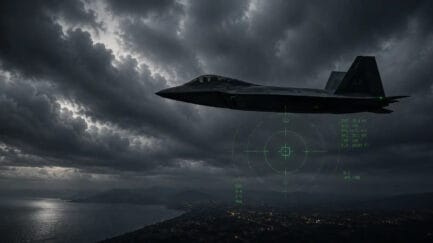
Stealth isn’t Strategy: Post-Stealth Warfare will be a “Dirty Mix” of Humans and Robots
Jahara Matisek
May 28, 2026

Regime Change from the Sky: Strategy, Air Power and the Illusion of Control
M.L.R. Smith
April 29, 2026

Reserves Without Purpose: The Hidden Weakness in Modern Militaries
Alexander Gerald
November 18, 2025